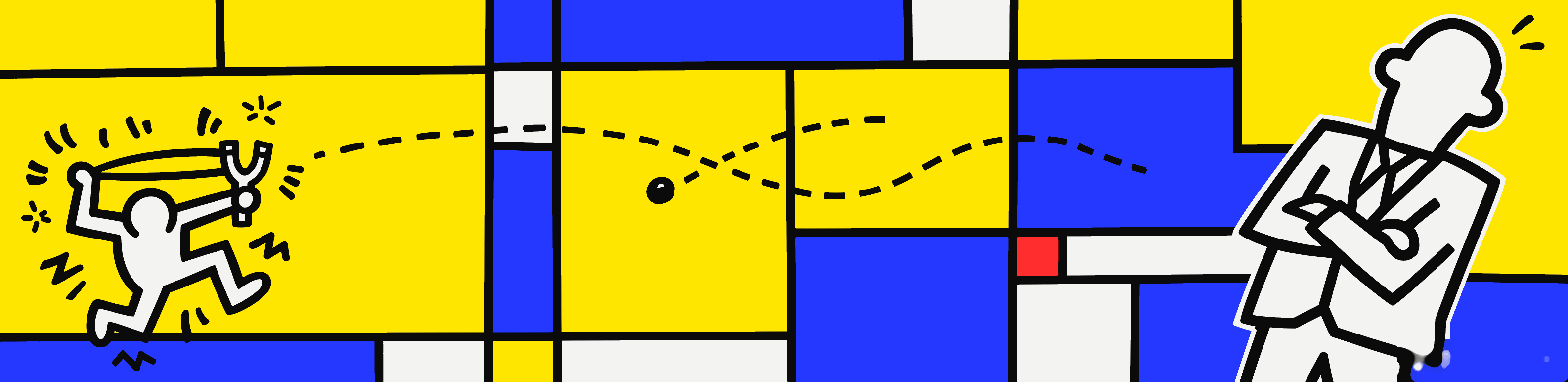
That bet works because the company holds the record: the call notes, the fine print, the time. Lysey builds the counter-record. This page is the method: why it exists, the one rule it runs on, how every case is built and checked, and why there is no name on the work.
What Lysey is
Lysey is documented investigation. It works case by case: it takes a person who was treated unfairly by a large company or institution and lays out exactly what happened on the evidence: the emails, the screenshots, the amounts, the dates. Nothing is played up and nothing is invented. Where the evidence stops, Lysey says so.
The standard is simple: documented, not alleged. Every figure, quote and screenshot comes from a dated original, kept unaltered. If it cannot be shown, it is not claimed.
Why Lysey exists
The bet, the playbook, and what Lysey does about it. Open each one for the longer read.
When a telco, an insurer, a bank, a platform or a government office gets something wrong, the two sides are not equal. They have the lawyers, the call centres, the fine print, and all the time in the world. You have a problem that is not your fault and a life to get on with. The whole bet is that you give up first. Usually, you do.
It rarely looks like wrongdoing at first. You are not refused, you are routed: to a bot, a form, a queue, a policy no one will explain. What you are owed does not arrive. A contract is not honoured. An agreement quietly evaporates. Or you are caught in a loop where every step to fix it only makes it worse.
It often goes wrong exactly where two companies work together and each points at the other, a platform and its provider, a hotel and a booking site, and privacy rules get used as the reason nothing can be done. Dressed up, it all looks legitimate. That is the point. It is a bluff, and it works, because almost no one keeps the proof.
Lysey documents these cases the slow, boring, undeniable way: the dates, the screenshots, the call notes, the letters, the actual paper trail. Where others report the same thing, it can connect the accounts, because ten people with the same story is a pattern, not a complaint. And when a case is strong, it can go to the press, where one person's problem becomes everyone's story.
Lysey did not begin as a theory. It began from direct experience of being the small party: of getting the runaround, of being told to accept it, of watching a big organisation count on exhaustion doing its work. It knows the playbook because it has been on the receiving end of it. That is the whole reason it keeps the evidence for other people now.
None of this is anti-business. The test is a simple one, older than any policy: was this reasonable and fair? Right is right, wrong is wrong.

The rule
Lysey publishes only what the evidence proves. If a company responds, it gets the last word, in the same place. If a company is in the right, Lysey says so, and it holds itself to the same rule: when Lysey is wrong, Lysey corrects it in the open. This is not about attacking big companies. It is about showing, with documents, what was right and what was wrong.
The record, not a pile-on
Case by case, on the record.It stays on the record, put right or not. Not a campaign, not a verdict, a documented account anyone can check against its sources.
How a case is built
Don't trust it. Check it. Open each one to see how.
Every figure, quote and screen rests on a dated document, screenshot or contemporaneous note. Evidence of a call is the notes taken at the time. Each exhibit is retained as it was captured, with its timestamp. Where an item cannot be shared, because of third-party privacy or someone's identity, it is described plainly instead. A case states plainly where the evidence stops. Lysey never stretches one person's case into a claim the evidence cannot carry.
The remedy came first. Lysey publishes a case only after the person affected has put the facts to the company privately and asked for a fix. That private track is the hearing: every reproach raised in it was on the company's desk long before publication, and the company's own written answers are quoted in the case, verbatim and in context. What ends up published is the record of that private track, after it failed to fix anything.
New reproaches get a letter. If the editing surfaces a reproach the company never had the chance to answer in that private track, it is not simply printed. Lysey puts it to the company in writing first: concrete questions, one reproach per question, with a clear deadline to answer. The reply is worked into the piece; if none comes, the piece says so.
Time to answer is part of the test. Before anything goes up, Lysey checks that the necessary questions were actually put, and that the company had a fair amount of time to answer. What counts as fair depends on what is at stake: a disputed charge can wait, data being deleted cannot.
After publication, the record keeps moving. The reply window, its closing date and its outcome are noted on the case. If a company stays silent, the questions it did not answer are put to it again, and that too is noted. Its own published words can be set beside what the record shows. Every step carries a date, and the case page records what was sent, what was asked and what came back. Not answering is a choice, and the page shows it.
What Lysey does not do. It does not file complaints with regulators on anyone’s behalf; if the person concerned does, the case says so, and no more. It does not trade publication, or any step on a page, for money, a settlement or a favour, from anyone. And it announces nothing it will not do.
What this is not: we do not submit drafts for approval, and we do not trade quotes for changes. We hear, we verify, we publish, and the record stays open.
Where a claim can be checked against a public source, it is linked or carries a source tag. Where it rests on private evidence, the case says so. Direct quotation marks are used only for words actually said or written; everything else is paraphrase. Words spoken in a call are never placed between quotation marks: notes are not recordings, so calls are always rendered as paraphrase.
Wherever a source can be captured, Lysey keeps it two ways: its own dated screen capture and PDF, fingerprinted with SHA-256 and published behind the yellow capture buttons on the case page, and, where the archive accepts the page, a third-party Wayback Machine snapshot. A source can quietly delete or change itself; the dated copy does not. So a case stays checkable even after a link goes dead.
Before it runs, each case is put through an adversarial review that tries to break it, on the law and on plain reasonableness and fairness. It does not take a court to tell right from wrong, but it does take a case that holds up when someone attacks it.
Publication is not the end of the hearing. If a named company responds at any point, its response is added to the page, in the sender's own words, where the article already reserves the space. The only edits are legal ones, and they are marked as such. Errors are corrected and logged in the case's update log.
If you are a company or person in a case, you can respond through the same contact form at any time, and your answer is published in the same place, unedited. Big organisations often stay silent, but the door stays open. The record should not stay one-sided when the other side is willing to speak.
Cases are evidence-based investigations. The voice can be sharp, but the factual spine is reporting. Where a passage is analysis or opinion, it is marked as such. This is not legal advice.
When a fact is wrong, it is corrected and the correction is shown, not folded quietly into an edit. A correction is labelled a correction, never dressed up as an update. Corrections appear on the case itself, in its "Updates, a developing story" log, next to the case's last-updated time.
To flag a case, name the passage and what you believe is wrong, with evidence if you have it, through the contact form.
Anonymous by design
No byline, no face, no personal brand. A case is only as strong as the documents behind it, so those are what you read, and what any editor can check. Keeping the names out of frame protects the people in the cases and keeps the focus where it belongs.
Anonymity is a shield for the work, not a way to dodge accountability. Every case is documented: primary evidence, sources archived, and the company given a real chance to put the matter right before any of it is published. A company that wants to answer will find the door open, and its answer belongs on the case itself. That record is public and stands on its own, whoever wrote it.
This is documented work, not paid-for coverage. No company pays to be covered or to be left out. Conflicts of interest belong on the case, in the open. Nothing here is legal advice. Editors and journalists who need to verify a case can reach Lysey through the press page. A name would only give a company something to answer instead of the documents.
The name
It rhymes with "icy". Lowercase in the wordmark, always, no full stop inside it, never all caps. A small, quiet name on purpose: the work should carry the weight, not the byline. You will see it once, in the corner of each piece, and then it gets out of the way.
The question everyone asks
Lysey does not confirm or deny anything about who writes it, now or later. Not the name, not the place, not the shape of it. The question is fair, and the answer will always be the same. Judge the documents; they do not depend on a byline.
The people in the cases
The people in the cases are real and their paper trail is real. Their names are not published, and are not shared. A pseudonym protects the person, never the facts, and the disclaimer travels with every case.
For press
If a case is strong, one person's problem becomes everyone's story. How to verify a case, credit Lysey, or apply to write is on the press page.